

Automatic Surface Top Flat Labeling Machine
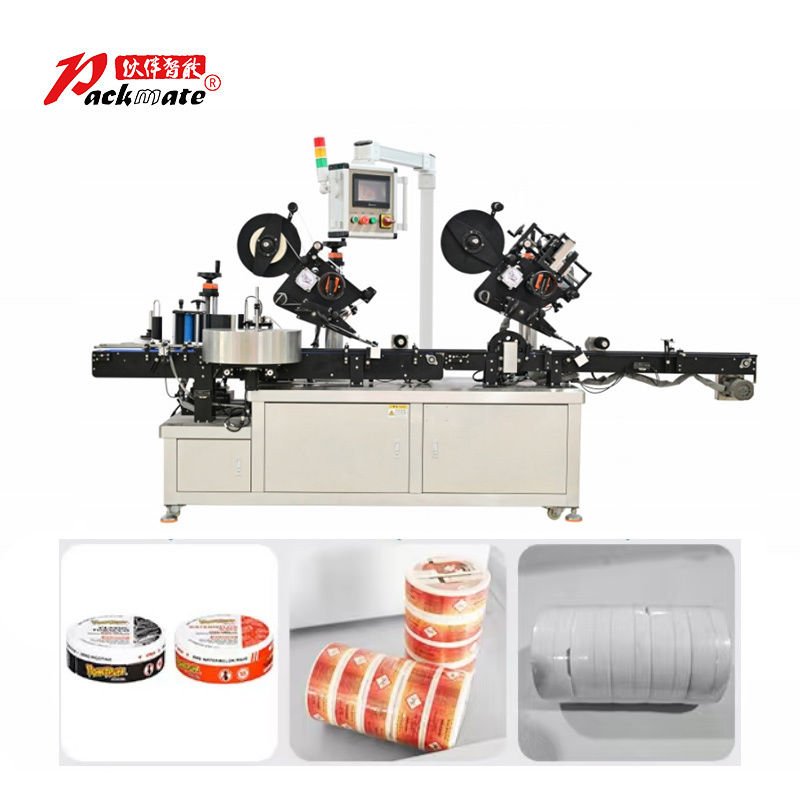
The Automatic Surface Top Flat Labeling Machine is a customized industrial labeling solution designed for high-efficiency labeling of snus cans, chewing gum tins, and various flat or round containers. Built for automatic top-surface flat labeling and multi-position labeling needs, this machine can label the top cover, bottom surface, and circumference of round cans with stable performance and consistent accuracy. It is widely used for snus can box labeling and other packaging lines where clear identification, brand presentation, and compliance labeling are required. With servo-driven label dispensing, PLC program control, and a touch-screen HMI, the system delivers reliable, repeatable labeling while remaining easy to operate and maintain. The compact footprint also makes it ideal for factories seeking to upgrade automation without expanding production space.
Product Advantages
Premium construction for industrial durability: The main structure uses SUS304 stainless steel combined with sandblasted, anodized aluminum alloy components, providing excellent corrosion resistance, rigidity, and long service life in continuous production environments.
High-speed servo drive with precise positioning: An advanced servo system enables fast label dispensing and accurate placement, improving throughput while reducing label waste and rework caused by misalignment.
Stable photoelectric detection: Imported photoelectric sensors from well-known brands ensure high stability and accurate object detection. The system supports automatic stop-and-dispense logic for consistent single-label output per product.
PLC + touch-screen HMI for intuitive control: PLC control paired with a human-machine interface delivers clear parameter setting, quick changeovers, and easy troubleshooting—suitable for both skilled operators and standard production staff.
Flexible mechanical adjustment: The labeling head position can be adjusted up/down, front/back, and tuned for parallelism and verticality, enabling adaptation to different product sizes and labeling positions.
Standalone or inline integration: The equipment can run independently or be connected to upstream/downstream machines to form a complete automated production line, supporting scalable factory automation.
Compact design: Space-saving structure and small footprint help optimize workshop layout while maintaining strong production capacity.
Technical Specifications
| Product Name | Automatic Surface Top Flat Labeling Machine |
| Specific Use | Industrial Flat Labeling Machine (Top/Bottom/Side for selected formats) |
| Typical Applications | Snus pouch cans, snus can boxes, chewing gum tins |
| Suitable Containers | Plastic cans, tins, metal cans, paper boxes, plastic boxes, bottles (depending on configuration) |
| Model | JsXP+Y200 |
| Machine Size (L×W×H) | 2500 × 1200 × 1600 mm |
| Machine Weight | 250 kg |
| Frame Material | SUS304 Stainless Steel + Aluminum Alloy |
| Conveyor Height from Floor | 850 ± 30 mm |
| Conveyor Belt Width | 101.6 mm |
| Labeling Speed | 20–200 pcs/min |
| Labeling Height Range | 30–150 mm |
| Applicable Container Diameter | 20–110 mm |
| Label Height | 15–135 mm |
| Label Length | 20–300 mm |
| Label Roll Inner Diameter (Core) | 76 mm |
| Label Roll Outer Diameter | 370 mm |
| Power Supply | 220V, 1.5 kW, 50/60 Hz |
| Labeling Accuracy | Flat labeling: ±0.5 mm; Round labeling: ±1 mm (excluding packaging material tolerance) |
| Packaging | Wooden box packaging |
| Delivery Time | 30 days |
| Payment Terms | L/C, T/T |
Application Fields
This automatic labeler is engineered for industries that require dependable labeling on flat surfaces and round containers. Typical use cases include snus can top/bottom labeling, snus can box labeling, chewing gum tin labeling, and general packaging operations for plastic, metal, or paper containers. It is suitable for factories producing consumer goods that demand clean label presentation, consistent placement, and scalable automation. The machine can also be deployed as part of a complete snus production workflow—supporting downstream labeling after packing, filling, lid placing/locking, and final boxing processes—ensuring the finished product is properly identified and market-ready.