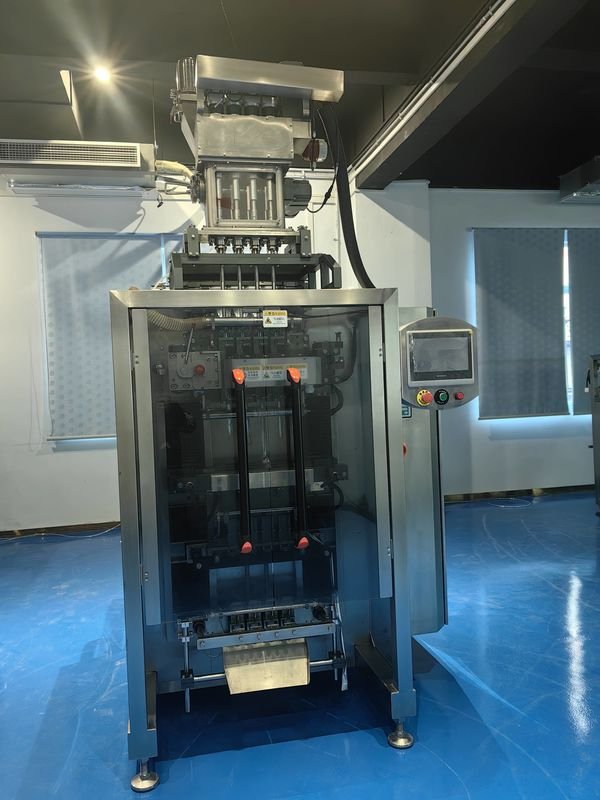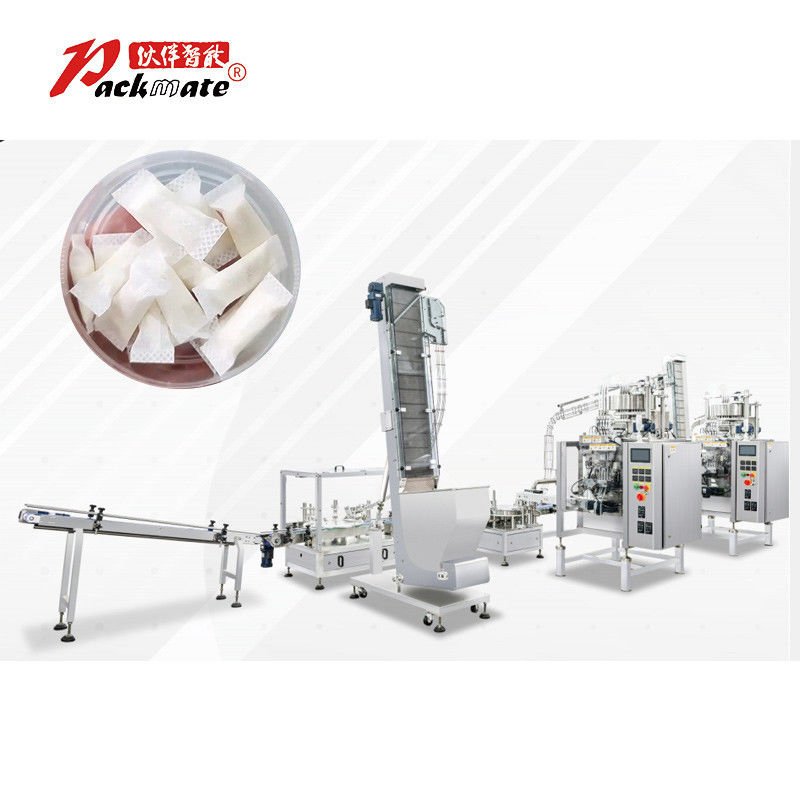
In today’s highly competitive tobacco manufacturing environment, efficiency, product consistency, hygiene, and automation are no longer optional. They are essential to maintaining brand reputation and meeting global production demands. A Snus Packing Integrated System for Automated Tobacco Packaging Line represents a smart and scalable solution for manufacturers seeking to improve output, reduce manual intervention, and ensure stable packaging quality across every stage of production. By combining intelligent control, precise material handling, and reliable sealing technology, this kind of integrated packaging system helps tobacco producers move toward a more modern, data-driven, and efficient factory model.

As the demand for smokeless tobacco products continues to expand in different markets, manufacturers need packaging machinery that can support high-volume production while also adapting to strict hygiene and quality standards. Integrated systems are especially valuable because they connect multiple packaging processes into one coordinated line, minimizing downtime and allowing continuous, smooth operation. For companies seeking dependable and future-ready packaging machinery, a well-designed snus packing system can become a strategic asset that improves both operating performance and customer satisfaction.
➤ Core value: An integrated snus packaging line reduces labor intensity, increases packaging consistency, improves traceability, and supports long-term production growth.
What Is a Snus Packing Integrated System?
A snus packing integrated system is a coordinated packaging solution developed to automate the main packaging procedures for snus products, from primary handling and filling to sealing, cartoning, counting, labeling, coding, inspection, and final collection. Instead of relying on isolated machines and repeated manual transfer, the integrated approach connects each stage through synchronized controls and mechanical interfaces. This improves efficiency and makes the entire line more stable and easier to manage.
Depending on the product format and production objectives, the system may include feeding units, pouch or can handling modules, weighing or dosing devices, sealing stations, vision inspection systems, reject mechanisms, and end-of-line packaging equipment. The automation logic ensures that every component works as part of a unified process. This kind of system architecture is especially useful in tobacco packaging, where production precision, repeatability, and product presentation are all critical.
✔ Integrated line advantages include:
Continuous material flow, fewer handling errors, centralized operation, easier maintenance planning, higher packaging speed, and more reliable product quality.
Why Automation Matters in Modern Tobacco Packaging
Automation has transformed the packaging industry by enabling manufacturers to achieve consistent output with less dependency on manual labor. In snus packaging, even small variations in filling, sealing, or positioning can affect shelf appeal, product integrity, and end-user confidence. Automated systems reduce these risks by maintaining fixed parameters and repeatable motion throughout production.
A modern automated tobacco packaging line can also enhance compliance with hygiene and safety requirements. Because fewer manual touchpoints are involved, contamination risk is reduced and production conditions become easier to standardize. In addition, digital monitoring allows operators and managers to track machine performance, identify bottlenecks, and make informed decisions about production planning.
For manufacturers operating in global markets, automation is also closely linked to competitiveness. Higher throughput, lower waste, and more stable product quality can reduce unit cost and strengthen market responsiveness. As a result, integrated snus packaging systems are increasingly considered a key part of intelligent manufacturing strategies.
Key Functional Modules in an Integrated Snus Packaging Line
1. Product Feeding and Handling
Stable feeding is the foundation of efficient packaging. A properly designed feeding system ensures that snus materials or packaged units enter the line in the correct orientation and at the right speed. Smooth handling minimizes product damage and keeps downstream equipment running steadily.
2. Filling and Dosing Precision
Accurate filling is essential for brand consistency and packaging compliance. Advanced dosing systems are engineered to control fill quantity precisely, helping reduce product waste and ensuring each pack meets expected standards. Precision at this stage directly affects product value and customer trust.
3. Sealing and Closure Integrity
Sealing quality determines whether the product remains protected during storage, transport, and retail display. Integrated systems use synchronized motion and accurate temperature or pressure control to ensure dependable sealing performance. This is especially important for preserving product freshness and maintaining attractive packaging appearance.
4. Coding, Labeling, and Traceability
Coding and labeling modules provide essential product information, such as batch numbers, production dates, and traceability data. In automated lines, these functions can be integrated with inspection systems to ensure code clarity and label positioning. This supports both regulatory requirements and internal quality management.
5. Inspection and Reject Systems
Integrated quality inspection can detect sealing defects, missing components, weight deviation, or coding errors before products move to final packaging. Automated reject units remove nonconforming items without interrupting the line, improving final output quality and reducing costly downstream issues.
Benefits of an Integrated System for Manufacturers
The most visible advantage of an integrated snus packaging line is the increase in production efficiency. Because machines are linked and centrally controlled, changeovers can be faster, coordination between stations is improved, and idle time is reduced. This enables a higher overall equipment utilization rate and supports large-scale production goals.
Another major benefit is quality consistency. In manual or semi-automatic operations, performance often depends on operator experience and working conditions. In contrast, integrated automated systems provide stable parameters and repeatable operation, which helps maintain a uniform standard over long production runs.
Integrated solutions also improve factory organization. With fewer disconnected steps, manufacturers can reduce floor-level congestion, simplify logistics between processes, and make operator responsibilities clearer. This contributes to a cleaner and more manageable production environment.
★ Key operational gains:
Higher throughput, lower labor requirements, better process visibility, improved packaging appearance, reduced waste, and stronger long-term return on investment.
How Intelligent Packaging Machinery Supports Long-Term Growth
As the packaging industry evolves, manufacturers are increasingly adopting intelligent equipment that offers more than mechanical automation. Smart packaging machinery can collect production data, monitor machine status, support remote diagnostics, and assist preventive maintenance planning. These capabilities are important for reducing unplanned downtime and improving lifecycle equipment value.
Packmate (GuangDong) Co., Ltd. is a high-tech manufacturer focused on intelligent packaging equipment innovation and production. With more than 22 years of company development, a modern 20,000㎡ manufacturing facility, over 125 professional team members, and 100+ units of advanced production equipment, the company provides efficient and stable solutions for industries including pharmaceutical, healthcare, food, and related packaging sectors. Its equipment complies with EU and GMP standards, showing a strong commitment to international quality requirements.
For businesses evaluating suppliers of automated packaging machinery, the manufacturer’s technical foundation is an important factor. Packmate has focused on the packaging equipment field for over 30 years, beginning with the development of its first packaging machine in 1993. Supported by 30+ patents and ongoing research and development, the company continues to deliver systems designed for reliability, precision, and modern production needs.
Engineering, Quality, and Compliance in Tobacco Packaging Equipment
In tobacco packaging, engineering quality affects every aspect of system performance. A machine must not only run quickly, but also maintain precise control over movement, pressure, timing, and alignment. This requires sound design, high-quality components, and disciplined manufacturing processes. A weak machine may appear cost-effective initially, but frequent stoppages, inconsistent packaging results, and maintenance issues often increase total cost over time.
Quality-oriented manufacturing is therefore a major selection criterion. From parts processing to final assembly and testing, each stage should follow clear quality control procedures. This is particularly important for automated lines, where one unstable station can affect the performance of the entire system. Reliable manufacturers pay close attention to durability, safety, and repeatability under demanding production conditions.
⚡ Important consideration: Machinery built in accordance with CE and ISO expectations, and aligned with GMP-oriented practices where relevant, gives manufacturers more confidence in safety, standardization, and export readiness.
The Importance of Flexible Design and Customization
Not all snus products are packaged in the same way. Different container types, pack sizes, output targets, and factory layouts may require different line configurations. That is why flexibility and customization are important features in an integrated system. A packaging line should be designed to fit the client’s actual production goals rather than forcing production to adapt to a rigid machine concept.
Engineering-driven manufacturers can optimize line structure, control logic, and module combination according to customer requirements. This may include compact line layout for limited factory space, expansion capacity for future output growth, or integration with upstream and downstream equipment. A well-customized system supports operational efficiency today while preserving scalability for tomorrow.
Manufacturers interested in learning more about available solutions and company capabilities can explore the official website of Packmate Machinery, where they can review its approach to intelligent equipment development and global supply support.
Global Delivery, Service Support, and After-Sales Responsiveness
Choosing a packaging line supplier is not only about machine performance. It is also about service reliability. Installation guidance, operator training, spare parts availability, troubleshooting response, and technical communication all influence the long-term success of the project. A supplier with international delivery experience and an established service network can reduce implementation risks and help customers maintain production continuity.
Located in the Guangdong-Hong Kong-Macao Greater Bay Area, Packmate benefits from strong industrial resources and efficient logistics connections. Its products are exported to Europe, the Americas, Africa, the Middle East, and Southeast Asia. With agency and service networks in multiple markets, the company is positioned to provide responsive support and dependable after-sales service for customers worldwide.
🔧 Reliable after-sales support helps manufacturers: shorten downtime, maintain line efficiency, improve operator confidence, and protect long-term equipment performance.
Future Trends in Automated Snus Packaging Lines
The future of tobacco packaging is moving toward greater intelligence, better energy efficiency, and more connected production systems. Manufacturers increasingly want machines that can integrate with factory management software, provide live production data, and support quick adjustments for changing product formats. These trends are driving demand for more modular, digital, and user-friendly packaging lines.
Another important trend is the growing focus on overall equipment effectiveness. Companies are no longer evaluating machines only by maximum speed. They are also looking at uptime, ease of cleaning, maintenance convenience, product changeover performance, and long-term operational stability. An integrated snus packing system that performs well across all of these dimensions will provide stronger business value than a line designed only for short-term speed.
Manufacturers that align with experienced engineering partners can better prepare for these changes. Companies such as Packmate emphasize innovation, precision manufacturing, and customer-focused improvement, which are essential qualities in the next stage of intelligent packaging development.
Choosing the Right Packaging Machinery Partner
When investing in a snus packing integrated system, manufacturers should evaluate the supplier’s engineering experience, manufacturing capability, certifications, customization ability, and service responsiveness. It is also useful to review whether the supplier understands complex automated line integration rather than only standalone machine supply. This distinction matters because line-level performance depends on system coordination as much as individual machine quality.
A strong partner will take time to understand production requirements, recommend a suitable configuration, and provide clear communication from design through commissioning. The best packaging machinery solutions are created through collaboration, technical transparency, and a commitment to long-term customer value.
In summary, a Snus Packing Integrated System for Automated Tobacco Packaging Line is more than a production upgrade. It is a strategic investment in efficiency, precision, compliance, and scalable growth. With the right system design and the right equipment partner, manufacturers can build a more intelligent, stable, and competitive packaging operation for the future.
Frequently Asked Questions
1. What is the main advantage of a snus packing integrated system?
The main advantage is that it connects multiple packaging stages into one automated line, improving production efficiency, reducing manual handling, and ensuring more consistent packaging quality.
2. Can the system be customized for different snus packaging formats?
Yes. A professional manufacturer can customize the line according to container style, output requirement, factory layout, coding needs, and downstream packaging processes.
3. Why is quality control important in automated tobacco packaging?
Quality control ensures accurate filling, reliable sealing, clear coding, and stable final appearance. It also helps reduce waste, rejects, and customer complaints.
4. What should manufacturers look for in a packaging machinery supplier?
Manufacturers should consider engineering experience, certifications, production capability, customization strength, service support, and experience with complete automated line integration.
5. How does intelligent packaging machinery support future factory development?
Intelligent machinery supports data monitoring, preventive maintenance, higher efficiency, easier management, and better integration with modern digital production systems.